DWI checkpoints are a common law enforcement tool across New York, particularly in Albany County and surrounding areas. These stops are often set up on weekends, holidays, and during high-traffic events, and many drivers encounter them without prior experience or understanding of how they work.
If you are stopped at a checkpoint, it is important to understand that while police have broader authority in this setting than during a typical traffic stop, that authority is not unlimited. What officers can and cannot do during a checkpoint stop often becomes a critical issue in defending a DWI charge.
Understanding your rights in this situation can make a meaningful difference in how your case unfolds.
How DWI Checkpoints Work in New York
Unlike a traditional traffic stop, where an officer must have reasonable suspicion to pull over a vehicle, DWI checkpoints operate under a different legal framework. Courts have allowed these checkpoints as an exception to standard Fourth Amendment requirements, but only when specific conditions are met.
To be considered lawful, a checkpoint must:
- Be conducted according to a neutral, predetermined plan.
- Stop vehicles in a consistent pattern, such as every car or every third car.
- Be clearly identified as a checkpoint, often with signage, cones, and visible police presence.
- Be approved and supervised by commanding officers, not left to individual officer discretion.
These requirements are designed to limit arbitrary enforcement and ensure that stops are conducted in a controlled and predictable manner.
If these standards are not followed, the legality of the stop itself may be challenged.
What Officers Can Do at a Checkpoint
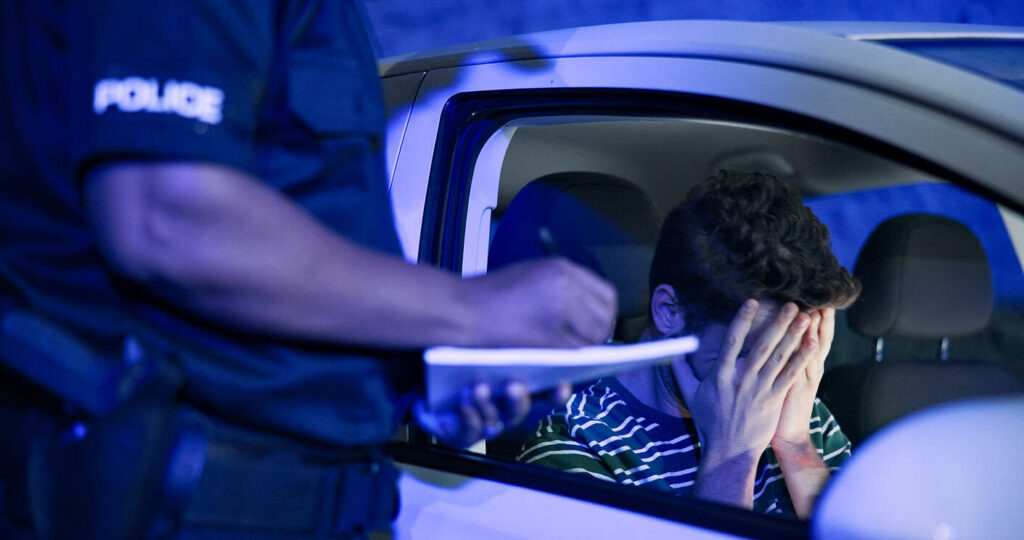
When you are stopped at a DWI checkpoint, officers may conduct a limited investigation. The initial interaction is typically brief and focused.
During a lawful checkpoint stop, officers may:
- Ask for your driver’s license, registration, and proof of insurance.
- Ask basic questions, such as where you are coming from or whether you have consumed alcohol.
- Observe your appearance, speech, and behavior.
- Look inside the vehicle from their vantage point.
- Request that you pull over for further evaluation if they develop a reasonable suspicion.
These observations often form the basis for deciding whether the interaction ends quickly or escalates into a more detailed investigation.
What Officers Cannot Do Without Cause?
While checkpoints allow for brief, suspicionless stops, they do not give officers unlimited authority to investigate drivers.
Without additional reasonable suspicion, officers generally cannot:
- Extend the stop beyond a brief initial interaction.
- Require you to answer investigatory questions beyond basic identification.
- Search your vehicle.
- Require field sobriety testing.
- Detained you for an extended period of time.
If an officer goes beyond these limits without a lawful basis, any evidence obtained afterward may be subject to challenge.
The line between a lawful checkpoint stop and an unlawful detention is often a central issue in DWI defense cases.
When a Checkpoint Stop Becomes a DWI Investigation
A checkpoint stop can quickly transition into a DWI investigation if an officer believes there are signs of impairment.
Officers may claim reasonable suspicion based on:
- The odor of alcohol.
- Slurred or inconsistent speech.
- Bloodshot or glassy eyes.
- Confusion or delayed responses.
- Admissions of alcohol consumption.
- Open containers in the vehicle.
Once reasonable suspicion is established, officers may direct you to a secondary screening area and request additional testing.
This is where many DWI cases begin to take shape.
Field Sobriety Tests and Chemical Testing
If a checkpoint stop escalates, officers may ask you to perform field sobriety tests or submit to a preliminary breath test.
It is important to understand the distinction between these tests:
- Field sobriety tests are typically voluntary.
- Preliminary roadside breath tests are also generally voluntary.
- Chemical tests administered after arrest are subject to New York’s implied consent laws.
How and when these tests are requested, administered, and documented can become critical issues in the case. Improper instructions, environmental conditions, and officer interpretation all affect the reliability of these tests.

Challenging the Legality of a Checkpoint Stop
In DWI cases arising from checkpoints, one of the first questions is whether the checkpoint itself was conducted lawfully.
Defense challenges may focus on:
- Whether the checkpoint followed a neutral and predetermined plan.
- Whether vehicles were stopped in a consistent pattern.
- Whether officers deviated from established procedures.
- Whether the stop was improperly extended.
- Whether reasonable suspicion actually existed.
Even when an arrest occurs, the legality of each step—from the initial stop to the investigation and arrest—must be carefully examined.
If any part of that process was unlawful, the evidence may be suppressed.
Why Early Legal Strategy Matters in Checkpoint Cases
Many drivers assume that a checkpoint stop automatically justifies a DWI arrest. In reality, these cases often involve multiple legal issues that require early evaluation.
Early legal representation allows our attorneys to:
- Obtain and review body camera and dash camera footage.
- Examine checkpoint procedures and planning records.
- Identify unlawful extensions of the stop.
- Challenge improper testing methods.
- Build a defense focused on suppression and reduction.
The sooner a defense strategy is developed, the more options may be available.
Speak With Our New York Criminal Defense Attorneys Today
If you were stopped at a DWI checkpoint in New York and now face charges, the legality of that stop and everything that followed should be carefully reviewed.
Contact O’Brien & Eggleston PLLC today to schedule a confidential consultation. Our Albany criminal defense attorneys will evaluate your case, explain your rights, and work to protect your future at every stage of the process.